
Diaper rash: causes, remedies, when to call a doctor
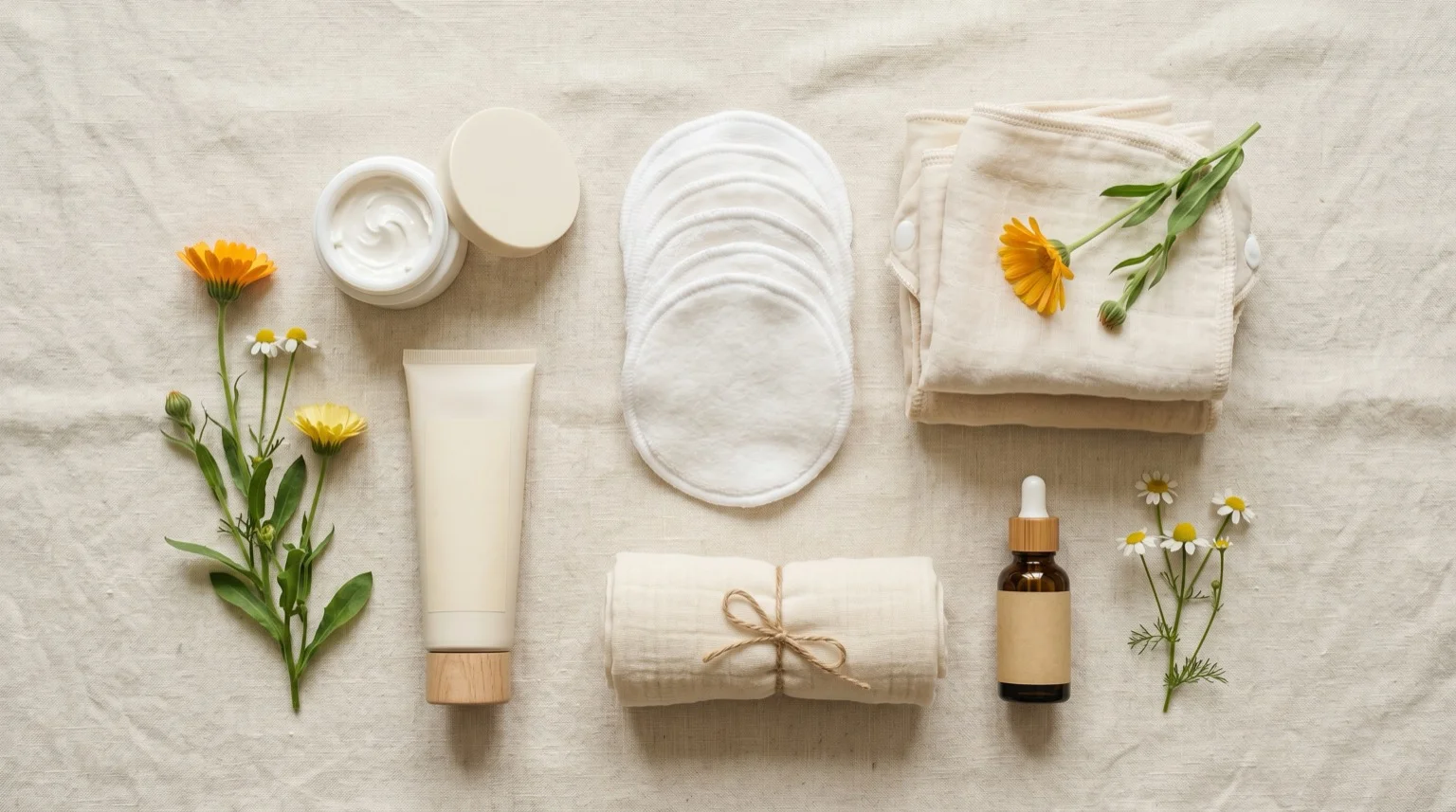
Sooner or later it happens to practically every baby: red skin in the diaper area, a few spots, irritation that flares up right when you need to leave the house. It's called diaper rash and it's one of the most common issues in the first 12 months. In most cases it clears up with a few simple steps; in others your pediatrician needs to step in. Here's how to tell the two apart and what to do.
The two most common causes
Diaper rash almost always falls into one of these two categories.
1. Friction (irritant) diaper rash
It's the most common form. A newborn's skin is 5 times thinner than an adult's, and the diaper — even the best one — creates a warm, humid microclimate. Damp skin + friction + slightly acidic urine and stool = irritation. It typically shows up as diffuse, even redness on the rounded areasof the buttocks and around the groin. No spots, no little blisters.
2. Candida (yeast) diaper rash
When irritation lingers or conditions are ideal (humidity, heat, recent antibiotics for the baby or for the breastfeeding mother), a Candida albicans infection (a yeast normally present on the skin) can take hold, taking advantage of an already weakened skin barrier. You can recognize it by specific signs:
- Intense, shiny redness with sharp borders.
- Small red satellite spots around the main area.
- It also involves the skin folds (groin, back of the thighs) — where friction rash usually doesn't reach.
- It doesn't improve with regular barrier creams (sometimes it actually gets worse).
The golden rule: dry and clean skin
The best therapy is keeping your baby's skin as dry and clean as possible. It sounds obvious, but it's 70% of the treatment for any mild form. In practice this means:
- Change the diaper often. Every 2-3 hours, and immediatelyafter every poop. Don't wait: even 30 minutes of stool in contact with irritated skin makes things much worse.
- Clean with warm water and cotton on days when there's redness. Baby wipes are fine for routine use, but if the skin is already irritated they're too aggressive: use absorbent cotton dampened with warm water and then pat dry without rubbing. Search for absorbent cotton for newborns
- Dry all the folds thoroughly. Pat with a soft cloth or, if really needed, a hairdryer on a cool/mild setting from 30 cm away. Damp skin in the folds = perfect breeding ground for Candida.
- Diaper-free time. Whenever you can, let your baby go without a diaper for 15-30 minutes on a waterproof pad. More air → faster healing.
- Correctly sized, highly absorbent diapers. If you're in the redness phase, avoid fastening them too tight. Look for diapers with a dry inner layer (“dry-top”). Search for extra-absorbent diapers
- No fragrances, no alcohol. Avoid scented wipes, perfumed talc, harsh body washes. Only dermatologically tested, neutral products. The same criteria apply to the whole daily newborn skin-care routine.
Which creams actually work
Zinc oxide creams (zinc paste)
These are the first remedy to try. Zinc oxide creates a physical barrier between the skin and the diaper environment: it lets the skin breathe but protects from urine, stool and moisture. The effective concentration ranges from 10% to 40%. Above 25% the barrier effect is very strong, ideal for cases where redness is already present.
Apply at every diaper change in a thick, visible layer (not massaged into the skin): think of it as a protective coat, not a cosmetic cream. It's normal for it to stay white on the skin — that's its job.
The brand matters less than the formula: check the label for a zinc oxide ointment or paste, fragrance-free and alcohol-free, with the concentration clearly stated on the packaging. Search for zinc oxide pastes
Antifungal cream (e.g. Canesten® / Lotrimin)
If the pediatrician confirms a suspected Candida diaper rash(satellite spots, fold involvement, no response to zinc oxide paste after 3-4 days), they may prescribe an antifungal cream containing clotrimazole — sold as Canesten® in the UK and as Lotrimin in the US — or equivalents. It's a targeted treatment, to be applied for 7-10 days even after apparent improvement, to prevent recurrence.
Important: don't self-medicate with antifungals without a pediatrician's diagnosis. An antifungal cream used on a friction rash (not Candida) won't help and can delay healing.
Mild corticosteroid cream (1% hydrocortisone)
In more severe and inflamed cases, the doctor may prescribe a low-potency corticosteroid cream — typically 1% hydrocortisone. It quickly reduces inflammation and gives the baby relief.
Only on a doctor's advice! Corticosteroids, even “mild” ones, on the diaper area should be used for the shortest time possible(5-7 days maximum), in a very thin layer, and never at the same time as antifungals unless explicitly directed. Low-strength hydrocortisone is sold over the counter in both the US and the UK, but that does not make it a do-it-yourself remedy for a baby: it should never be used “preventively”, and never outside the area your doctor indicated.
It's worth knowing that the UK's national health service is more cautious still. The NHS confirms a GP may prescribe a steroid cream when a nappy rash is very red and sore, but its guidance on hydrocortisone for skin states that children under 10 should only use it if a doctor or pharmacist has told them to, and that it should not be used for more than 7 days unless a pharmacist or doctor says otherwise. It's a fallback treatment, not a standard step in the routine.
When to call the pediatrician (and don't wait)
Call the pediatrician promptly — in the UK, your GP or health visitor — if:
- The redness doesn't improve after 2-3 days of zinc oxide paste + frequent changes.
- You see white spots, blisters, scabs or pus: possible bacterial or fungal infections.
- The irritation spreads beyond the diaper area onto the belly or legs.
- The baby has a fever — if you're unsure what to measure it with, there's the guide to choosing a baby thermometer — or seems to be in unusual distress during changes.
- The skin breaks open, bleeds, or looks shiny with swollen edges.
- Rashes come back frequently (more than once a month): there may be an underlying cause to investigate.
What NOT to do (even if “grandma said so”)
- Olive oil or vegetable oils on inflamed skin. They seal in moisture instead of letting it evaporate, making things worse.
- Talcum powder. The American Academy of Pediatrics tells parents not to use talc-containing products on a baby or child: talc-based powder can contain asbestos fibers without the label saying so, and breathing in a large amount — a spill near the baby's face, for instance — can cause severe lung disease. The NHS says the same thing in one line: do not use talcum powder on nappy rash. It clumps in the folds and has no proven benefit.
- DIY mixing of corticosteroid + antifungal. Dangerous. Only if the pediatrician explicitly prescribes a combination cream.
- Washing with harsh soap or disinfectant. Warm water is enough. Disinfectants like chlorhexidine-type solutions are too aggressive on a newborn's skin.
- Skipping diaper changes “because I'll just waste the diaper”.Changing every 2-3 hours is the first and most important measure.
Prevention: the ideal daily routine
To keep the rash from coming back:
- Change the diaper every 2-3 hours during the day, and at least once at night if you see it's wet.
- Use low-dose barrier creams (10-15% zinc) as a habit, even without visible redness. Search for zinc-based barrier creams
- Clean, dry skin, and diaper-free time whenever you can.
- Alcohol-free, fragrance-free wipes for daily cleaning. Search for gentle wipes for newborns
- Reliable-brand diapers in the right size, changed frequently (don't “save” on changes). Search for dermatologically tested diapers
In summary
Diaper rash is almost always due to friction or Candida. The basic rule is just one: keep the skin dry and clean. For most cases of redness, frequent changes, gentle cleaning, diaper-free time and a 25% zinc oxide paste are enough. If there's no improvement after 2-3 days, or if you see satellite spots, blisters or scabs, call your pediatrician without delay. Stronger therapies (clotrimazole antifungals, mild 1% hydrocortisone) work very well, but belong in a doctor's hands: never use them on your own initiative.
A little daily attention almost always prevents a doctor's visit. And when a doctor's visit is really needed, the sooner you call, the sooner it's resolved.
Frequently asked questions
How can you tell friction diaper rash apart from Candida (yeast) diaper rash?
Friction diaper rash shows up as diffuse, even redness on the rounded areas of the buttocks and groin, with no spots or blisters. Candida diaper rash instead has intense, shiny redness with sharp borders, small red satellite spots around the main area, involves the skin folds (groin, back of the thighs) too, and doesn't improve — sometimes it even gets worse — with regular barrier creams.
What's the single most effective remedy for diaper rash?
The golden rule is keeping the skin as dry and clean as possible: change the diaper every 2-3 hours and immediately after every bowel movement, clean with warm water and cotton on days with redness, dry all the folds thoroughly, give 15-30 minutes of diaper-free time when you can, and use correctly sized, highly absorbent diapers with no fragrances or alcohol.
Which cream should you try first for diaper rash?
The first remedy to try is a zinc oxide cream (zinc paste), with an effective concentration between 10% and 40% — above 25% the barrier effect is very strong. Apply it at every diaper change in a thick, visible layer, without massaging it into the skin.
When are antifungal ointment and corticosteroid ointment used?
An antifungal cream containing clotrimazole (Canesten® in the UK, Lotrimin in the US) is used only if the pediatrician confirms Candida diaper rash, applied for 7-10 days even after apparent improvement. A low-potency corticosteroid cream (1% hydrocortisone) is reserved for more severe, inflamed cases, only on medical advice, for the shortest time possible (5-7 days maximum) and in a very thin layer. Neither should be used on your own initiative.
When should you call the pediatrician?
Call the pediatrician promptly if the redness doesn't improve after 2-3 days of zinc oxide paste and frequent changes, if white spots, blisters, scabs or pus appear, if the irritation spreads beyond the diaper area, if the baby has a fever or seems to be in unusual distress during changes, if the skin breaks open, bleeds, or looks shiny with swollen edges, or if the rash comes back more than once a month.
What should you avoid when treating diaper rash?
Avoid olive oil or vegetable oils on inflamed skin (they seal in moisture instead of letting it evaporate), talcum powder (the American Academy of Pediatrics tells parents not to use talc-containing products on babies, and the NHS says not to use talcum powder on nappy rash), mixing corticosteroid and antifungal creams on your own without the pediatrician's guidance, and washing with harsh soap or disinfectant — warm water is enough.
Sources
- NHS (UK) — Nappy rash (page last reviewed 28 August 2026; accessed 12 September 2026). Source for: the causes, changing wet or dirty nappies promptly, patting the skin clean and dry, nappy-free time, a thin layer of barrier cream at each change, the instruction not to use soap, bubble bath, talcum powder or antiseptic creams, and when to see a GP or health visitor.
- NHS (UK) — Hydrocortisone for skin (page last reviewed 28 August 2025; accessed 12 September 2026). Source for: children under 10 using it only on a doctor's or pharmacist's advice, the 7-day limit, and its over-the-counter availability.
- American Academy of Pediatrics, HealthyChildren.org — Common Diaper Rashes & Treatments (last updated 18 December 2024; accessed 12 September 2026). Source for: fragrance-free zinc oxide creams applied thickly, alcohol- and fragrance-free cleaning, the two-to-three-day threshold before calling the pediatrician, and antifungal treatment for a yeast rash.
- American Academy of Pediatrics, HealthyChildren.org — How to Choose Safer Personal Care Products (last updated 31 October 2024; accessed 12 September 2026). Source for: the recommendation against talc, the undeclared asbestos fibers and the lung damage caused by inhaling talc.