
Newborn sleep essentials: sleep sack, crib, monitor
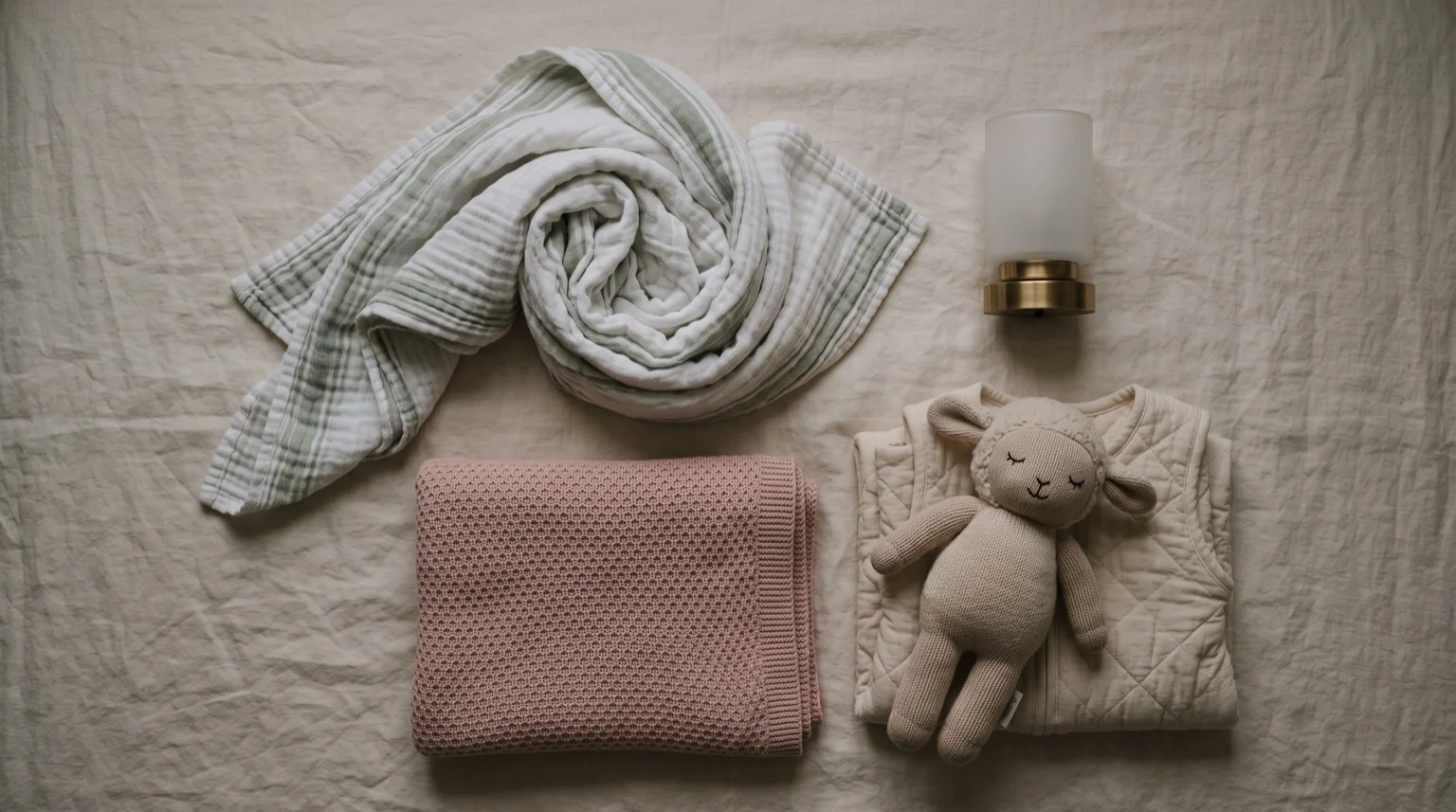
Newborn sleep is the first topic new parents research — and also the one surrounded by the most myths. In the first three months, most babies sleep between 14 and 17 hours a day, broken up into short cycles. But the question that matters most isn't “how many hours”: it's how they sleep. According to the Eunice Kennedy Shriver National Institute of Child Health and Human Development (NICHD), part of the National Institutes of Health, SIDS (Sudden Infant Death Syndrome) rates in the US have fallen by more than 50% since safe sleep practices like back sleeping became standard guidance. This guide covers what to buy, what to avoid, and why.
How much does a newborn actually sleep
In the first three months, total sleep runs between 14 and 17 hours a day, but almost never in one stretch: newborns wake every 2-4 hours, day and night, mostly out of hunger. Around 3 months, sleep stretches start to lengthen, and between 4 and 6 months many babies sleep longer blocks at night. These are averages, not promises: some newborns sleep more, others less, and that alone isn't a warning sign.
Safe sleep: the three rules that actually matter
Beyond any product, there are three recommendations backed by the CDC and the American Academy of Pediatrics, and they matter more than any accessory:
1. Always on their back, even for short naps — it's the single factor most strongly linked to the drop in crib deaths recorded over recent decades.
2. In the parents' room, on a separate surface (crib or co-sleeper), for at least the first six months — room-sharing cuts the risk by up to 50% compared with a separate room, but that doesn't mean bed-sharing.
3. A “bare” crib: just a firm, correctly sized mattress and a fitted sheet. Everything else, see below, stays out.
The sleep sack: why it replaced blankets
A loose blanket in the crib can slip over a newborn's face during the night, one of the avoidable risks the guidelines explicitly flag. A sleep sack solves the problem at the root: the baby is zipped inside, can't pull it over their face, and temperature is regulated by choosing the right TOG rating (a value indicating how much warmth the fabric provides) for the season — a low TOG (0.5-1) in summer, a higher one (2.5-3.5) in winter. Brands like Ergobaby and Love To Dream offer models designed with free arms for the first few months, useful if your baby wakes often while swaddled too tightly.
Where a newborn sleeps: crib, co-sleeper or cot
For the first six months, the choice most in line with the guidelines is a crib or a co-sleeper attached to the parents' bed (a “sidecar” setup): the baby stays close, you share the room, but they sleep on their own separate surface. Bedside bassinets attach to the side of the bed and have a removable side panel, handy for night feeds without getting up. After six months, once the baby starts moving around more, the crib is often swapped for a larger cot.
The baby monitor: useful, or extra anxiety?
A monitor, audio or video, doesn't prevent SIDS and doesn't replace the three rules above: it's a convenience, not a safety device, however much some product marketing might suggest otherwise. That said, it's useful for hearing your baby from another room once you're past the room-sharing period. Audio models (e.g. Philips Avent) are enough for most families; video models (e.g. Boifun) cost more and mainly add peace of mind for parents, not safety for the baby.
White noise and light for newborn sleep: do they actually help?
White noise can help mask sudden household sounds and keep sleep more continuous, but the scientific evidence is thinner than the market for dedicated products suggests: it works for some babies and makes no difference for others. The same goes for blackout curtains: useful mainly for daytime naps and for not bringing on an early wake-up with morning light, but not essential in the first few months, when newborns don't yet tell day and night apart.
What NOT to put in the crib
This is the most important part of the article, not a side note. Guidelines explicitly advise against, at least in the first year: padded bumpers (the suffocation risk outweighs any aesthetic benefit), pillows (newborns don't need one and shouldn't have one near their face), stuffed animals and soft toys in the crib during sleep, and infant positioners (the horseshoe-shaped cushions that “lock” the baby on one side): despite being sold as baby registry items, they aren't recommended by safe sleep guidelines.
Four rules for choosing newborn sleep gear
1. The three rules (on their back, shared room, bare crib) matter more than any product: apply them before thinking about accessories.
2. The sleep sack is the purchase with the best safety-to-usefulness ratio: pick the right TOG for the season.
3. Monitors and white noise are conveniences for parents, not substitutes for the safety rules — buy them if they help you sleep better, not to “feel safer”.
4. Don't put bumpers, pillows, stuffed animals or positioners in the crib in the first few months, even if they're gifted to you or you see them everywhere online.
Newborn sleep products mentioned, at a glance
The product categories mentioned in this guide, each suited to a different scenario, not a ranking:
🌙 Newborn sleep sack — pick the TOG rating based on the season
🛏️ Co-sleeper (bed-attached crib) — for room-sharing in the first few months
🔊 Audio monitor — the option that's enough for most families
📹 Video monitor — more peace of mind for parents, not more safety for the baby
For the rest of the list, from the baby wardrobe to feeding, there's the guide to what you actually need and the guide to what you need for breastfeeding and bottle feeding. If you want to set everything up from scratch, start with the complete guide to baby registries.
Frequently asked questions about newborn sleep
How much should a newborn sleep in the first few months?
In the first 3 months, most newborns sleep between 14 and 17 hours a day, broken up into short 2-4 hour stretches. It's not a number to chase anxiously: every baby has a different rhythm, and safe sleep matters far more than the exact hour count.
Why is a sleep sack recommended instead of blankets?
Loose blankets can slip over a newborn's face during the night — the CDC lists blankets among the soft bedding to keep out of a baby's sleep area. A sleep sack, chosen with the right TOG rating for the season, removes that risk entirely and can't shift the way a blanket can.
Should a newborn sleep in the parents' room?
Yes: guidelines from the CDC and the American Academy of Pediatrics recommend that newborns sleep in the same room as their parents, on a separate surface, for at least the first six months. Room-sharing cuts the risk of SIDS by up to 50% compared with a separate room.
Can I use bumpers, pillows and stuffed animals in the crib?
No, not in the first few months. Safe sleep guidelines explicitly advise against padded bumpers, pillows, stuffed animals and infant positioners in the crib: they're among the items most associated with suffocation risk. The ideal crib has only a firm, correctly sized mattress and a fitted sheet, nothing else.
Sources
- Centers for Disease Control and Prevention (CDC) — Providing Care for Babies to Sleep Safely (retrieved 2 September 2026).
- Eunice Kennedy Shriver National Institute of Child Health and Human Development (NICHD), National Institutes of Health — Let's Talk About SIDS (retrieved 2 September 2026).
- American Academy of Pediatrics / HealthyChildren.org — A Parent's Guide to Safe Sleep (retrieved 2 September 2026).