
Best baby thermometer: which type to choose
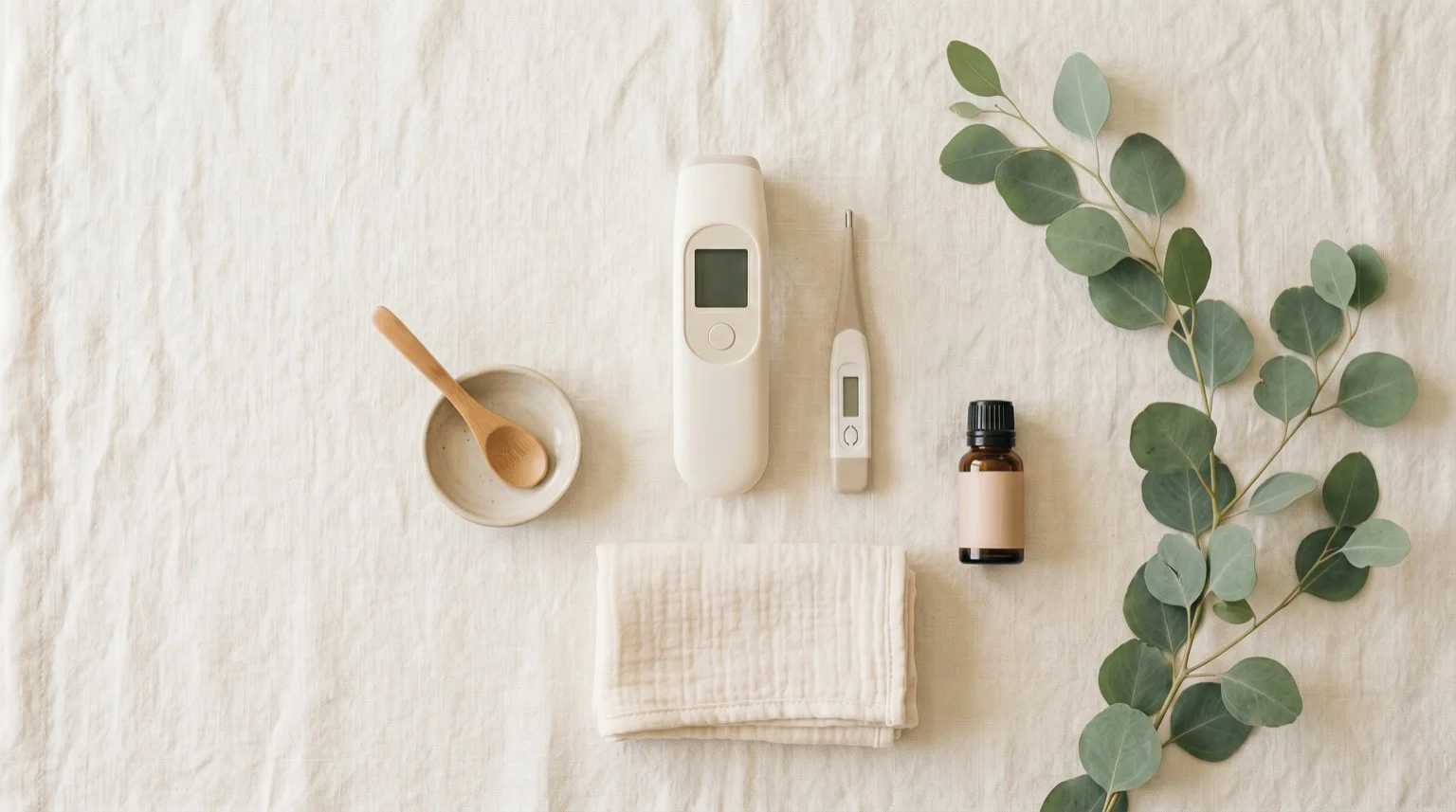
It's one of those objects you hope you'll never use and yet, sooner or later, you'll need it: the thermometer. The first fever always arrives at the least convenient moment — at night, on the weekend, when the pediatrician is closed. Having a reliable, easy-to-use thermometer at home lets you face that moment calmly. Of all the types, the forehead infrared ones are by far the most convenient with a newborn. Let's see why, and how to choose well.
Why forehead infrared thermometers are the most convenient
They measure the temperature in 1-2 seconds by bringing or resting the sensor against the forehead, without invasive contact. The huge advantage with a newborn is that you can measure them while they sleep, without waking them and without the struggle that an underarm or rectal thermometer involves.
- Very fast: immediate result, perfect with a baby who won't stay still.
- Hygienic: many models are non-contact (a few cm from the forehead).
- Easy at night: backlit display, immediate reading even in the dark.
- Measurement memory: useful for reporting the course of the fever to the pediatrician.
The new models are genuinely reliable: infrared technology has improved a lot in recent years. Accuracy, however, depends on the quality of the sensor — and this is where the brand makes the difference.
Choose a good brand. Cheap infrared thermometers without certifications can give erratic readings (even ±0.5 °C), which matter a great deal with a newborn. Established brands (Braun, Chicco, Beurer, Tommee Tippee and the like) guarantee calibrated, reliable sensors. Search for forehead infrared thermometers on Amazon
The other types compared
Classic digital thermometer (underarm/rectal)
Cheap and very precise, especially rectally (the method pediatricians consider the most accurate under 3 months). The downside is the inconvenience: the baby has to stay still for 30-60 seconds, and the rectal route requires gentleness. Excellent as a second “precision” thermometer to use for confirmation.
Ear (tympanic) infrared thermometer
Fast and accurate, but poorly suited to the first months: a newborn's ear canal is too small and narrow, and a wrong probe position gives erroneous readings. It becomes a good option after 6 months.
Forehead strip or pacifier thermometer
Forehead strips and pacifier thermometers are a convenient idea but not very reliable: use them at most as a rough indication, never to decide whether to give a medication or call the doctor.
| Thermometer type | Speed | Comfort with a newborn | When to use it |
|---|---|---|---|
| Forehead infrared | 1-2 seconds | Very comfortable, even while asleep | Main choice, from the very first days |
| Classic digital (underarm/rectal) | 30-60 seconds | Uncomfortable, baby must stay still | Second precision thermometer (rectal is most accurate under 3 months) |
| Ear (tympanic) | Fast | Poorly suited to the first months (canal too small) | Good option after 6 months |
| Forehead strip or pacifier | Instant | Convenient but not very precise | Rough indication only, never for medical decisions |
How to measure fever correctly
- Baby at rest. Crying, agitation, heavy blankets or a warm room raise the measured temperature. Wait until they're calm.
- Dry, uncovered forehead. Sweat, bangs or a hat distort the forehead reading. Dry and uncover the forehead.
- Respect the indicated distance. Every non-contact model has an optimal distance (usually 1-3 cm): read the instructions.
- Repeat twice. If you have a doubt, measure twice and consider the higher value. In case of serious doubt, confirm rectally with the digital one.
When it counts as a fever (and when to call the pediatrician)
We talk about fever above 38 °C (rectal measurement; the other routes tend to give slightly lower values). Call the pediatrician without waiting if:
- The baby is under 3 months old and has more than 38 °C: it's always a situation to assess right away.
- The fever exceeds 39 °C at any age.
- The fever lasts more than 2-3 days or is accompanied by unusual drowsiness, inconsolable crying, breathing difficulties, skin rashes, refusal of food or signs of dehydration.
Important: the thermometer measures, it doesn't cure. Don't give antipyretic medications to the newborn on your own initiative without the pediatrician's advice, especially in the very first months.
In summary
A reliable thermometer is one of those purchases you make once and thank yourself for a thousand times. For a newborn, the good-brand forehead infrared thermometer is the most practical choice: fast, hygienic, usable even while they sleep. You might keep a classic digital one as a precision thermometer for confirmations. Always measure when the baby is calm, and remember the golden rule of the first 3 months: faced with a fever, call the pediatrician without hesitation.
It's also the only measuring device in that small first-months kit: everything else is daily care, from the newborn skin-care routine to the barrier cream you'll be glad to have at the first sign of diaper rash.
Frequently asked questions
What is the best thermometer for a newborn?
A good-brand forehead infrared thermometer is the most practical choice: it measures temperature in 1-2 seconds, without invasive contact, and lets you check the baby even while they sleep. It's still worth keeping a classic digital thermometer as a precision reference for confirmations.
Are forehead infrared thermometers reliable?
The new models are genuinely reliable, but sensor quality makes the difference: cheap infrared thermometers without certifications can give erratic readings, even ±0.5 °C, a gap that matters a great deal with a newborn. It's better to choose established brands like Braun, Chicco, Beurer or Tommee Tippee.
Is an ear (tympanic) thermometer good for a newborn?
Not in the first months: a newborn's ear canal is too small and narrow, and a wrong probe position gives erroneous readings. It becomes a good option after 6 months.
Are forehead strips or pacifier thermometers reliable?
No, they are not very reliable: use them at most as a rough indication, never to decide whether to give a medication or call the doctor.
At what temperature is it considered a fever in a newborn?
A fever is considered anything above 38 °C measured rectally; other measurement routes tend to give slightly lower values.
When should you call the pediatrician right away for a fever?
Without waiting, if the baby is under 3 months old and has more than 38 °C, if the fever exceeds 39 °C at any age, or if it lasts more than 2-3 days or is accompanied by unusual drowsiness, inconsolable crying, breathing difficulties, skin rashes, refusal of food or signs of dehydration.