
Breastfeeding & bottle feeding: what to actually buy
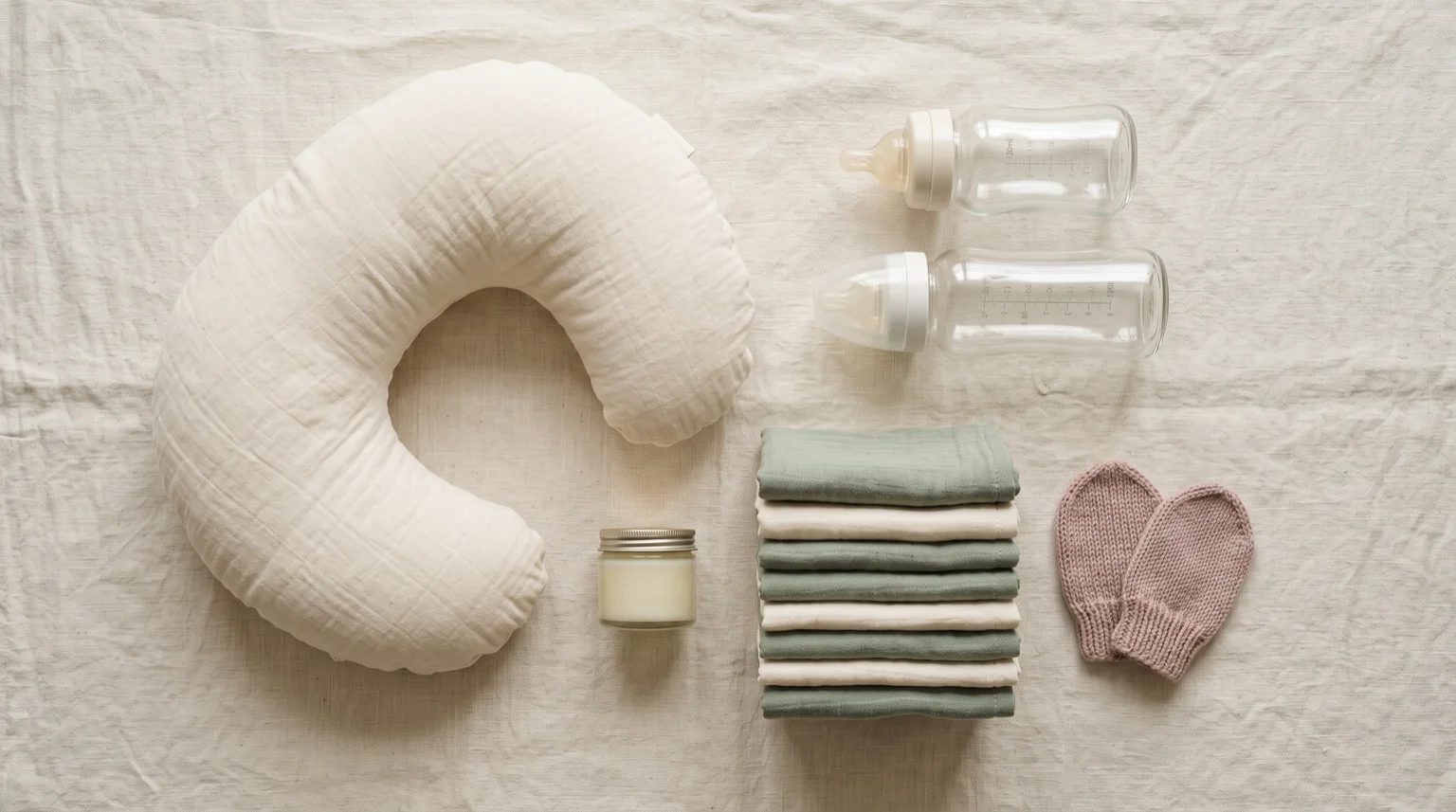
Whether you're breastfeeding, bottle feeding or doing a bit of both, the shopping list looks more similar than you'd think. In the United States, 86.1% of babies are ever breastfed, but only 48.5% are exclusively breastfed through 3 months and 29.8% through 6 months, with 62.8% still breastfeeding at all at 6 months (CDC, National Immunization Survey-Child, 2023 birth cohort). The American Academy of Pediatrics recommends exclusive breastfeeding for a newborn's first six months, but real-life practice — a thousand different reasons, none of them wrong — is almost always a mix of methods. This guide won't weigh in on the clinical side (that's a conversation for your pediatrician or midwife): it simply covers what to actually buy, what to expect, and what to skip.
The first real purchase: anti-colic bottles
“Anti-colic” isn't empty marketing: it refers to a valve that lets air into the bottle instead of into your baby's stomach, cutting down on spit-up and fussiness after feeds. You'll want one even if you're breastfeeding, as soon as you expect even a single bottle a day — pumped milk, the occasional formula top-up, combination feeding.
2-3 bottles are plenty to start with, not a ten-pack: in the first few weeks you'll figure out whether you'll be using bottles often or barely at all. A solid, widely used choice is the MAM Easy Start 260 ml (pack of 2): an anti-colic valve on both sides, self-sterilises in the microwave, and a progressive-flow teat. If you're after an equally reliable alternative that's a touch cheaper, the Philips Avent Natural Response 260 ml has a teat designed to mimic the breast, useful for switching between bottle and breast without nipple confusion.
Breast pump: manual or electric?
The right question isn't which one is “better”, but how often you'll actually use it. For occasional pumping — the first days in hospital, the odd outing — a manual pump like the Philips Avent manual breast pump is more than enough: quiet, no batteries, and it washes in three pieces.
If instead you're planning to pump regularly — going back to work, building a freezer stash, structured combination feeding — an electric pump cuts down time and effort by a wide margin. “Wearable” models that sit inside your bra, like the Momcozy S9 Pro let you move around while pumping, something traditional electric pumps with tubes and a base simply don't allow.
Bottle warmer and steriliser: one gadget or two?
Neither one is essential, and that's the inconvenient truth few people mention. Breast milk or formula warms up fine in a bowl of hot water, and bottles can be sterilised by boiling them for 5 minutes. That said, in the first few months, when a newborn's immune system is still fragile and night feeds come thick and fast, a combined machine genuinely saves time. The Grownsy 10-in-1 warms, defrosts and sterilises with the same unit — one of the best-reviewed picks in the category, especially useful if you're doing night-feed shifts and don't want to wake the whole house turning on the hob.
The nursing pillow: comfort that punches above its weight
This is the most underrated purchase, and the one that ends up getting the most use: if you're breastfeeding, that's hours a day for weeks on end, often with the same arm in the same position. A horseshoe-shaped pillow like the nursing pillow supports your back and arm, eases neck strain during long feeds, and doubles as a pregnancy pillow beforehand, which is exactly why it's worth buying well in advance rather than as an afterthought.
Feeding gear not to buy before the birth
The classic mistake is showing up to the birth with a complete feeding kit before you even know how things will go. Things to hold off on: a stockpile of formula (brands often change on the pediatrician's advice), more than one cooler bag for pumped milk, bottle sets beyond the initial 2-3, dedicated insulated bags. All of this can be bought after the first two or three weeks, once the real picture — breast, combination or bottle — is clearer.
Four rules for buying feeding gear
1. Before the birth: 2-3 anti-colic bottles and a breast pump, even just a manual one.
2. Only switch to an electric pump once you find you're pumping regularly, not “because it might come in handy”.
3. A bottle warmer and steriliser are conveniences, not necessities: buy them if the nights get heavy, not before.
4. The nursing pillow is worth buying early, it doubles up during pregnancy and is one of the most-used items in the first few weeks.
Feeding products mentioned, at a glance
The products mentioned in this guide, each suited to a different scenario, not a ranking:
🍼 MAM Easy Start 260 ml — anti-colic bottle, mainstream pick
🌿 Philips Avent Natural Response 260 ml — alternative for combination feeding
✋ Philips Avent manual breast pump — occasional pumping
🔌 Momcozy S9 Pro — frequent pumping, wearable
♨️ Grownsy 10-in-1 — combined bottle warmer + steriliser
🛏️ nursing pillow — comfort for long feeds
For the rest of the list, from the baby wardrobe to the big purchases, there's the guide to what you actually need and the essential baby wardrobe checklist. If you want to set everything up from scratch, start with the complete guide to baby registries.
Frequently asked questions about breastfeeding and bottle-feeding gear
Do I need anti-colic bottles if I'm breastfeeding?
Yes, if you expect to give even just one bottle a day (pumped milk or formula for combination feeding). The anti-colic valve reduces swallowed air no matter what's in the bottle. If you're breastfeeding exclusively and don't plan on bottles at all, you don't need one before the birth.
Manual or electric breast pump: which should I buy?
Before you buy either, check your insurance: under the Affordable Care Act your health plan must cover the cost of a breast pump, rental or new, so most parents get theirs at no cost. A manual pump is enough for occasional pumping or the first days in hospital; an electric one is worth it if you plan to pump regularly — going back to work, structured combination feeding, or building a freezer stash.
Do I really need a bottle warmer and a steriliser?
A steriliser is useful in the first few months, when a newborn's immune system is more fragile: boiling bottles in a pot works just as well, but a dedicated machine saves time. A bottle warmer is convenient but not essential — a bowl of hot water gets the same result for free.
What should I buy before the birth for feeding?
The bare minimum: 2-3 anti-colic bottles, a breast pump (even just a manual one) and, if you plan to breastfeed, a nursing pillow. A bottle warmer, steriliser and extra bottles can wait until after the birth, once you actually know how feeding is going.
Sources
- Centers for Disease Control and Prevention — National and State Breastfeeding Rates: Data Results (NIS-Child, 2023 birth cohort; last reviewed 31 July 2026).
- American Academy of Pediatrics, Section on Breastfeeding — Why Breastfeed? (exclusive breastfeeding for the first six months, continued breastfeeding to two years or beyond; updated 3 August 2026).
- HealthCare.gov — Breastfeeding benefits (“Your health insurance plan must cover the cost of a breast pump. It may be either a rental unit or a new one you'll keep.”).