
Best toys for ages 1 to 3: what toddlers truly love
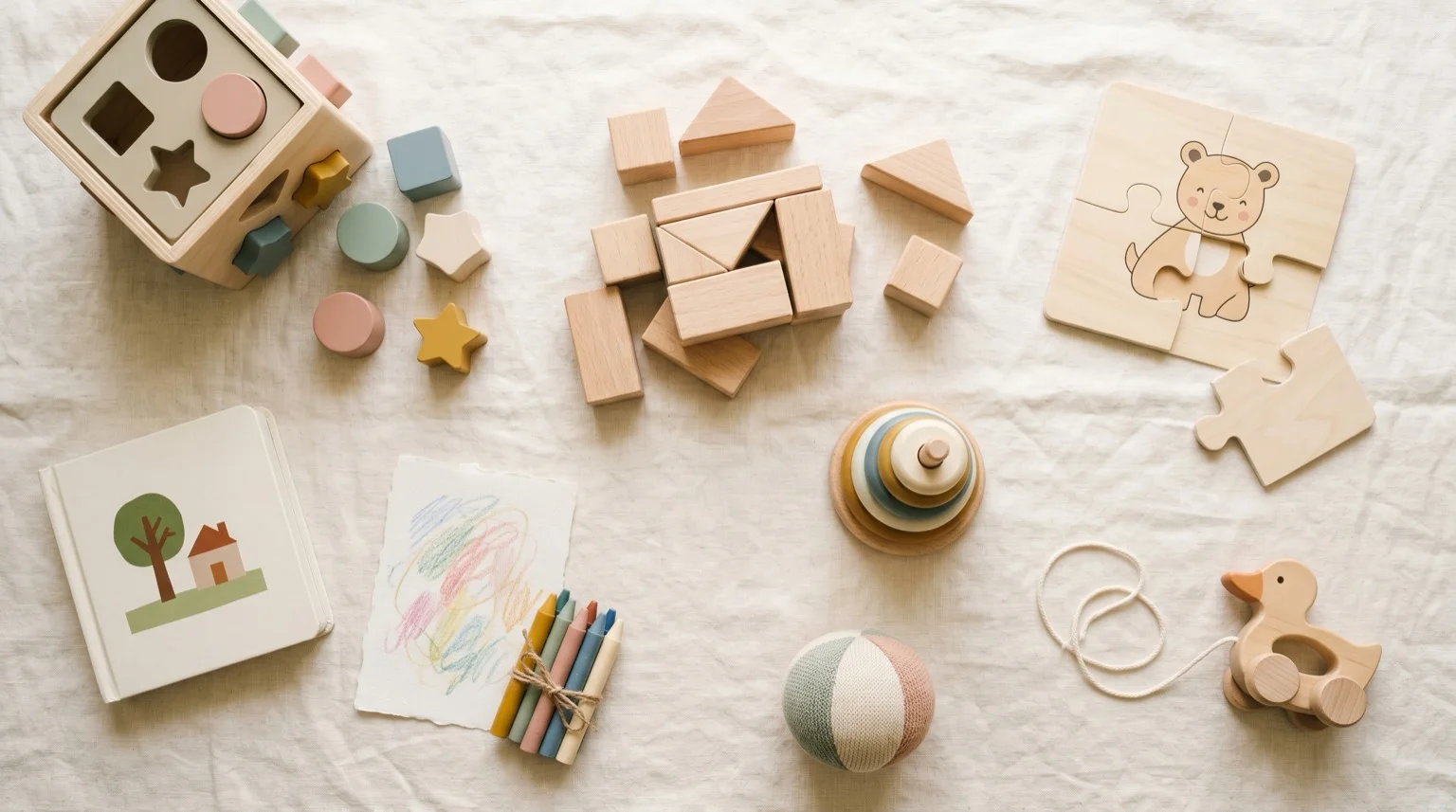
Between 1 and 3 years something magical happens: your child goes from exploring the world with their mouth to building, fitting pieces together, pretending and telling stories. Play isn't a pastime — it's how they learn to move, talk, solve problems and understand emotions. The good news? The toys they love most at this age are often the simplest ones. Here are the ones that really work, broken down by age, with a few tips to help you buy wisely.
12-18 months: stack, slot, knock down
At this age your child is a little scientist of cause and effect: they stack, knock down, fill up and empty over and over again. Don't let it bore you — for them it's pure research.
- Stacking cubes and rings: classic wooden or silicone stackers. They train hand-eye coordination and the concept of big versus small.
- Containers to fill and empty: balls, shapes, buckets. Wonderfully simple and endlessly loved.
- Shape sorters: the classic box with the cube, the circle, the triangle. A first taste of problem solving.
- Soft balls: rolling and throwing a ball is one of the first social games to play with mum and dad.
18-24 months: move, push, pull
Now that they walk confidently, movement becomes play. Push-along and pull-along toys are absolute favourites: they give independence and make toddlers feel “grown up”.
- Push walkers: with blocks inside or in the “first steps” version, they steady the walk.
- Pull-along animals: the little dog on a string that follows them everywhere is an evergreen that never goes out of style.
- Pedal-free ride-ons: the first “vehicles” pushed along with the feet train balance and legs.
- First musical instruments: tambourines, xylophones, maracas. Rhythm, listening and lots and lots of noise.
2-3 years: build, fit together, reason
Now comes the golden age of building blocks and first puzzles. Hands are more precise, concentration stretches out, and your child starts to plan before they act.
- Large bricks: chunky building blocks (Duplo-style) are perfect for little hands and spark imagination and fine motor skills.
- Few-piece puzzles: from 2-4 pieces upwards. They teach patience and shape recognition.
- Magnetic building tiles: colourful magnetic tiles for building in 3D, hugely popular and made to grow with your child.
- Play dough and modelling clay: squeezing, pressing, shaping — a tonic for motor skills and creativity.
Pretend play: the “make-believe” that changes everything
Around 2 years, pretend play takes off: your child imitates everyday life and makes sense of the world. It's the most important kind of play for developing language and empathy.
- Play kitchens and pot sets: cooking, serving, “feeding” the stuffed animal.
- Dolls and soft toys to care for: cuddling, putting to sleep, comforting.
- Doctor kits, tool sets, toy phones: imitating adults and their “roles”.
- Toy cars and tracks: inventing journeys, stories and sounds.
If you're after a gift idea that grows with your child, go for open-ended, versatile toys — the ones that don't have a single “right” way to be used. Find educational toys for ages 1-3 on Amazon
How to choose well (and avoid the bedroom-warehouse)
- Less is more. A few quality toys beat ten toys that do everything by themselves. Toys that are too “packed” with lights and sounds leave the child with little to do.
- Check the recommended age. It's not just about difficulty: US rules ban small parts in toys intended for children under 3, and a toy graded 3+ that contains a small part has to carry a choking-hazard warning instead.
- Favour safe, sturdy materials. Certified wood and non-toxic silicone or plastics from a maker that states ASTM F963 compliance last and can be washed.
- Go for “open-ended” toys. Building blocks, cubes, animals, play dough: they change with the child's age and last for years, unlike the single-function gadget.
In summary
From 1 to 3 years, the best toys are the ones that let the child do the work: stackers and containers at one year, push-along and pull-along toys around eighteen months, building blocks, puzzles and pretend play towards two and three. You don't need lots of toys, just the right ones for the moment. And if you're torn, remember: a basket of bricks and a tub of play dough will entertain more than a thousand flashing gadgets.
Frequently asked questions
What are the best toys for ages 1 to 2?
Between 12 and 18 months, stacking cubes and rings, containers to fill and empty, shape sorters, and soft balls to roll and throw all work well. Around 18-24 months, toddlers move on to push-along and pull-along toys, such as push walkers, pull-along animals, pedal-free ride-ons, and first musical instruments.
What are the best toys for ages 2 to 3?
At this age, large bricks (Duplo-style building blocks), few-piece puzzles (from 2-4 pieces upwards), magnetic building tiles, and play dough or modelling clay are ideal. It is also the age when pretend play takes off, with play kitchens, dolls and soft toys, doctor kits, and toy cars.
What is pretend play, and why does it matter?
It is the make-believe that takes off around age 2, when children imitate everyday life and make sense of the world — for example cooking, caring for a doll, or playing doctor. It is the most important kind of play for developing language and empathy.
How do you choose a toy that is safe and age-appropriate?
Always check the recommended age on the packaging: US rules ban small parts in toys intended for children under 3, and a toy graded 3+ that contains a small part has to carry a choking-hazard warning instead. Favour safe, sturdy materials, such as certified wood and non-toxic silicone or plastics from a maker that states ASTM F963 compliance.
Is it better to have fewer toys or lots of toys?
Fewer, quality toys are better: a few good toys beat ten toys that do everything by themselves with lights and sounds, leaving the child with little to actually do.
What does it mean to choose open-ended toys?
These are toys like building blocks, cubes, animals and play dough, which do not have a single right way to be used: they adapt and change as the child grows, lasting for years, unlike single-function gadgets.