
Montessori Toys: What They Are and Why They Are Worth It
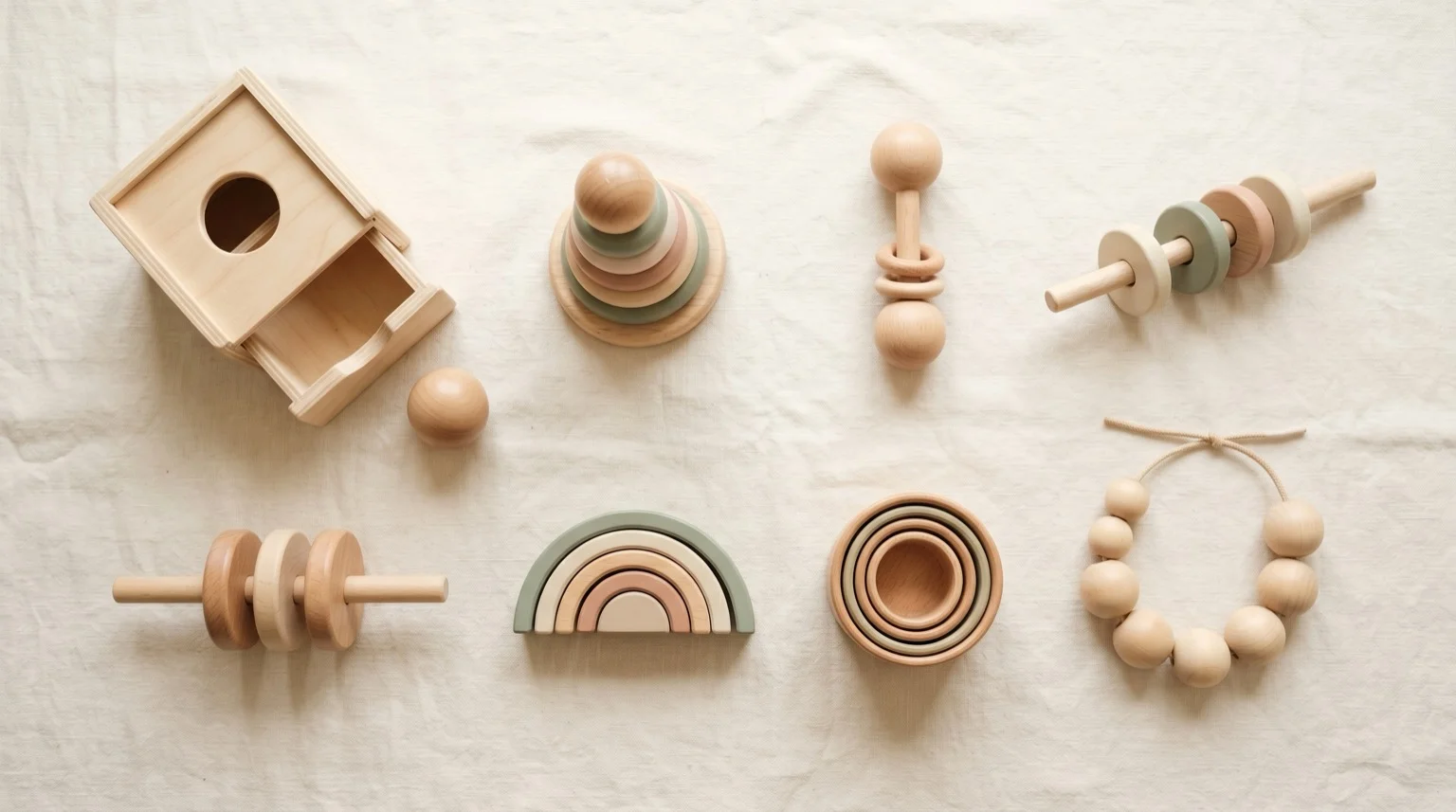
“Montessori toys” is one of the most used (and overused) labels on the shelves of children's stores. But what does it really mean? And, above all: are they worth choosing, or is it just a trend with a higher price tag? In this guide I'll explain what toys inspired by the Montessori method are, which principles they follow, how to recognise the authentic ones and why — in my opinion — they deserve a place on your baby registry.
What Montessori toys are
Montessori toys are toys designed around the educational principles of Maria Montessori, the Italian educator and physician who, at the start of the twentieth century, revolutionised the way we think about early childhood education. The underlying idea is simple and powerful: a child learns by doing things alone, through direct experience, movement and the handling of real objects.
A Montessori toy, then, is not a toy that “entertains” the child while they stay passive. It is a tool that invites them to act: to fit, stack, thread, pour, open and close. Every gesture trains a specific skill — hand-eye coordination, fine motor control, concentration, the ability to solve a small problem on their own.
Be careful, though: Montessori is not a registered trademark. Anyone can print “Montessori” on a box. That's why it's important to learn to recognise the features of a toy that is genuinely inspired by the method, beyond the marketing label.
The principles of the method applied to play
To work out whether a toy is truly Montessori, check whether it respects these key principles:
- Natural materials. Wood, fabric, metal, natural fibres. The child explores with all their senses, and different materials offer temperatures, weights and textures that plastic simply can't.
- One concept at a time. The toy isolates a single challenge (shape, colour, size) instead of mixing lights, sounds and a thousand functions. This helps concentration.
- Realistic, not fantastical. In the early years Montessori favours objects rooted in reality: animals in the right proportions, everyday-life scenes. The real world comes before fantasy.
- Self-correcting. The toy is built so that the child works out for themselves whether they've made a mistake (the cylinder that's too big won't fit in the hole), without needing an adult to correct them.
- Essential and non-electronic. No batteries, no screens. It's the child who brings the toy to life, not the other way around.
Why choose them: the real benefits
Philosophy aside, why should a parent prefer these toys? The concrete advantages I've observed — and that education research confirms — are several.
They build autonomy and concentration. A child who manages to complete an activity on their own feels satisfaction and learns to stay absorbed in a task. Concentration isn't innate: it's trained, and Montessori toys are the perfect gym.
They train fine motor skills. Threading rings, fitting shapes, pouring: these are gestures that prepare the hand for writing and strengthen coordination. Skills that stay useful for years.
They don't get tiring and grow with the child. A simple, well-made toy gets used in different ways at different ages. A set of cubes at six months is something to grasp; at two years it becomes a tower to build. Fewer toys, but longer-lasting ones.
They're beautiful and durable. Quality wood lasts for years, gets passed down between siblings and still looks good in the living room. An investment, not a throwaway purchase. Search for wooden Montessori toys on Amazon
How to recognise an authentic Montessori toy
When you're standing in front of a shelf (or a product page), ask yourself these questions:
- Is it made of natural materials? Be wary of the “Montessori” toy that's all colourful plastic and flashing lights.
- Does it do one thing, well? If it has twenty functions, sounds and little songs, it isn't Montessori: it's an electronic toy in disguise.
- Does it let the child act? The child should be the protagonist, not the toy that does everything by itself while they watch.
- Is it right for their actual age? A toy that's too easy bores them, one that's too hard frustrates them. The right challenge is the one just above their current abilities.
Montessori toys by age
Not every toy is right for every age. Here's a rough map to help you find your way.
0-6 months. Light wooden or fabric rattles to grasp, soft sensory balls, the first high-contrast mobiles (black/white/red) and shatterproof mirrors. The baby discovers their own body and follows objects with their eyes.
6-12 months. The grasp-and-release phase: objects to pick up and move, balls that roll, the classic “ball drops into the cylinder” toy, the first boxes with holes for posting shapes.
12-24 months. Shape sorters, ring stackers, building cubes, the first knobbed puzzles, pouring activities (with water or dried legumes, under supervision). This is where fine motor skills take giant leaps. Search for Montessori shape sorters and stackers
2-3 years and beyond. More complex puzzles, activity boards (lacing, buttoning, screwing), miniature practical-life toys, the first letters and numbers in wood or sandpaper. The child imitates the world of adults and gets ready to learn.
Mistakes to avoid
- Buying everything at once. A few well-chosen toys, rotated over time, are worth more than a roomful. Too much choice scatters attention.
- Trusting the label alone. “Montessori” on the box guarantees nothing. Look at the product, not the word.
- Pushing the age. Introducing a toy that's too complex too early frustrates the child. Respect their own pace.
- Doing it for them. The beauty of the method is letting them try, get it wrong and try again. Step in only if they ask you to.
In short
Montessori toys aren't an expensive fad: they're a concrete educational tool, designed to put the child at the centre and let them learn through experience. Natural materials, simplicity, one concept at a time and plenty of autonomy: these are the principles that set them apart from an ordinary toy. Choose a few, of good quality, suited to their age — and let them be the protagonist of play. They also make a wonderful baby registry gift: they last over time and say a lot about the care you put into your child's growth.
Frequently asked questions
What are Montessori toys?
Toys designed around the educational principles of Maria Montessori, the Italian educator and physician who revolutionised early childhood education at the start of the twentieth century. The underlying idea is that a child learns by doing things alone, through direct experience, movement and the handling of real objects.
Is “Montessori” a registered trademark that guarantees quality?
No. Montessori is not a registered trademark, so anyone can print “Montessori” on a box. That's why what matters is the toy's actual features — materials, simplicity, the autonomy left to the child — rather than the marketing label.
Which principles set an authentic Montessori toy apart?
Five key principles: natural materials (wood, fabric, metal, natural fibres), one concept at a time, a realistic rather than fantastical approach, being self-correcting — the child works out for themselves whether they've made a mistake — and having no batteries or screens.
What are the concrete benefits of Montessori toys?
They build autonomy and concentration, train fine motor skills (useful later for writing too), don't get tiring because they're used in different ways at different ages, and are made from durable materials like quality wood that gets passed down between siblings.
Which Montessori toys suit the first 6 months of life?
Light wooden or fabric rattles to grasp, soft sensory balls, the first high-contrast mobiles (black/white/red) and shatterproof mirrors: at this stage the baby discovers their own body and follows objects with their eyes.
What mistakes should you avoid when choosing Montessori toys?
Buying too many at once (a few well-chosen toys are worth more than a roomful), trusting the label alone, pushing the age by introducing toys that are too complex too early, and doing things for the child instead of letting them try, get it wrong and try again on their own.